Security Is Golden
Shooting slings, carry slings, and tactical slings are all designed to help you carry your firearm in a safe and comfortable manner, but each type of sling has its own unique features and benefits.
Shooting slings are typically two-point slings that attach to the front and rear of a firearm. They are designed to provide stability and support when shooting and to help you transition between different shooting positions quickly and efficiently.
Carry slings, as the name suggests, are meant for carrying a rifle over the shoulder or across the back when not actively shooting. They are typically single-point or two-point slings and are a great choice for general-purpose use, self-defense, or patrol officers. Carry slings often have features such as padded shoulder straps, adjustable straps, and quick-release buckles for added comfort and convenience.

Tactical slings are versatile and designed for various purposes. They often allow quick transitions from carrying to shooting positions. They can be used to retain the weapon close to the body for rapid deployment or to switch shoulders easily. Today`s versions are broken down into three types: single, two-point, and three-point.
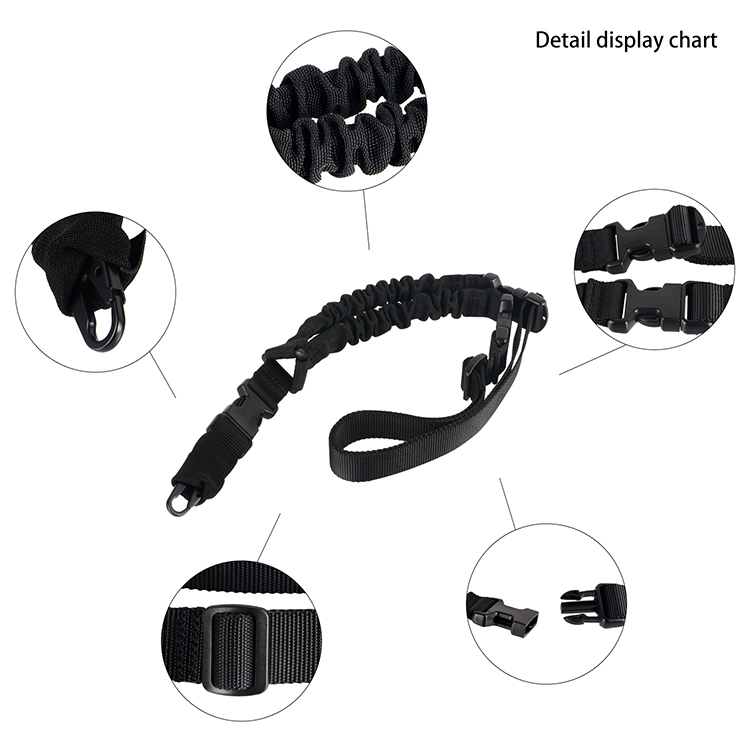
Single-Point Slings: Single-point slings are easy to use and allow for quick transitions from carrying to shooting positions. The sling should fit tight to the body, so most come with an adjustment strap.
Two-Point Slings: These are popular for stability and comfort. They allow you to carry the rifle across your back or chest, distributing the weight evenly. It attaches at two points, normally the rear of the stock and the front of the handguard, creating a large loop.
Three-Point Slings: a mythical sling that is rarely seen in the wild. Shooters, range enthusiasts, operators and gunslingers have rarely been able to tame it.These combine features of two-point and single-point slings. They provide good stability and maneuverability but can be more complex to use.